








As an Amazon Associate, Early Bird Wins earns from qualifying purchases. We may also earn from other affiliate links on this page at no extra cost to you.
Last updated: Oct 23, 2026
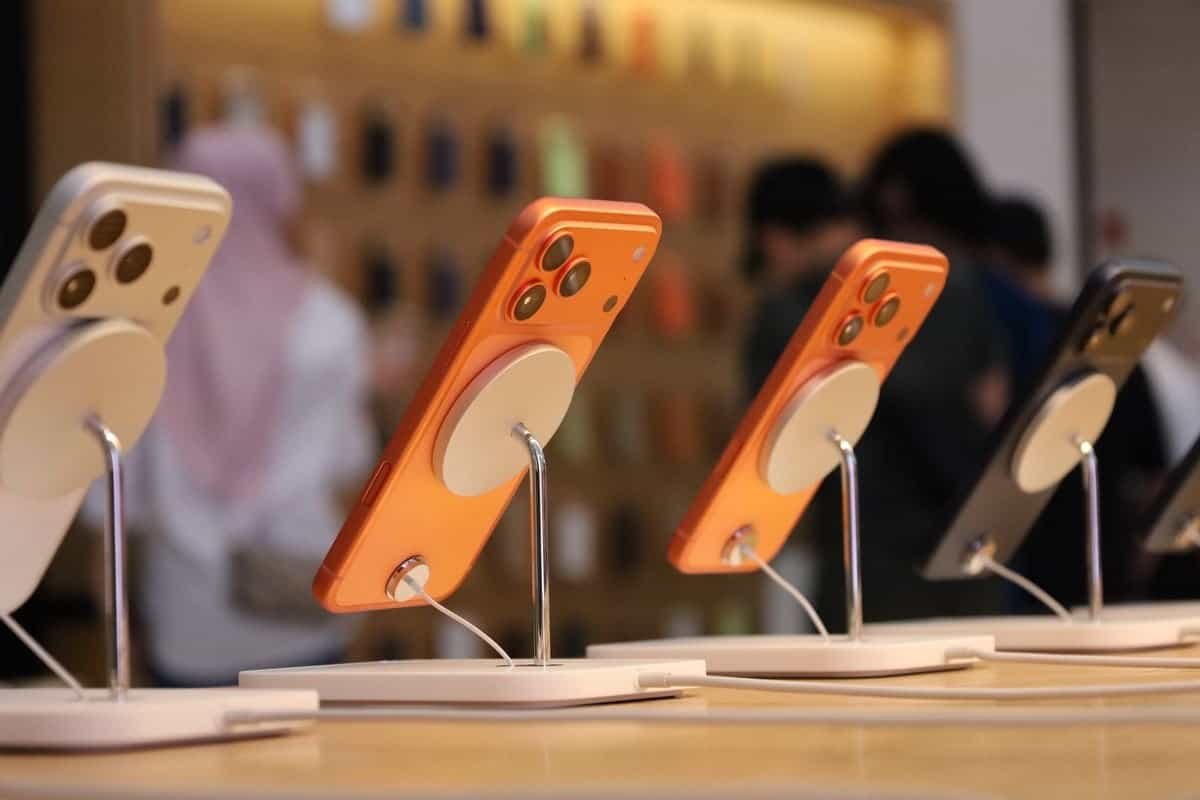
The iPhone Duo is Apple’s first foldable iPhone. It’s a book-style phone with a 5.4-inch outer screen that opens into a 7.6-inch inner display, and it starts at $1,999 for 256GB. Pre-orders opened Friday, Oct 16, and it goes on sale today, Friday, Oct 23, 2026.
Quick verdict: buy it if you want the biggest screen Apple has ever put in a phone, you’ll actually use that screen for reading, video and multitasking, and you’re fine paying early-adopter money for a first-generation design. Wait if your top priorities are the best iPhone camera, Face ID, a lighter phone, or a lower price. For most people, the iPhone 18 Pro is still the safer buy.
iPhone Duo at a glance
These are the key specs from Apple’s iPhone Duo tech specs page and its Sept. 9, 2026 launch announcement, as of Oct 23, 2026:
- Displays: 7.6-inch inner folding OLED (1878 x 2670, 430 ppi) with a nano-texture finish; 5.4-inch outer OLED (1398 x 2034, 460 ppi). Both have ProMotion up to 120Hz, Always-On and Dynamic Island, with up to 3000 nits peak outdoor brightness.
- Size and weight: 5.2 mm thick when open, 11.3 mm when closed; 254 grams (8.96 ounces).
- Chip: A20 Pro, the same chip used in the iPhone 18 Pro models, cooled by a custom vapor chamber.
- Rear cameras: 48MP Fusion Main and 48MP Fusion Ultra Wide, plus a 2x optical-quality crop. There’s no separate telephoto lens.
- Front cameras: 12MP Center Stage camera on the outside and an under-display FaceTime camera on the inner screen.
- Security: Touch ID in the side button. No Face ID.
- Battery: two batteries, rated by Apple for up to 24 hours of typical use, up to 31 hours of video on the inner display and up to 44 hours on the outer display.
- Durability: grade 5 titanium design, Ceramic Shield 2 on the front, rated IP68 (up to 6 meters for 30 minutes).
- Other: eSIM only (no physical SIM tray), USB-C with USB 3 speeds, Camera Control, no Action button, iOS 27.
Apple says the inner display’s layers “glide past one another like the pages of a book” to relieve bend stress, and that the matte finish “minimizes crease visibility.” Nobody has independent long-term durability data yet.
Price and storage: which iPhone Duo should you buy?
Here’s the US pricing from apple.com as of Oct 23, 2026. All four storage sizes come in Night Sky or Star White.
| Storage | US price (apple.com) | Who it’s for |
|---|---|---|
| 256GB | $1,999 | Most buyers, especially if you pay for iCloud storage |
| 512GB | $2,199 | People who shoot a lot of 4K video or keep big offline libraries |
| 1TB | $2,599 | Heavy video shooters who rarely offload to a computer |
| 2TB | $3,199 | A niche few who need huge on-device storage and accept the price |
Storage advice: Apple’s footnote says a standard setup uses roughly 12GB to 24GB, including iOS 27 and Apple apps, and that Apple Intelligence’s on-device models use about 7GB. That leaves plenty of room on 256GB for most people. The Duo shoots 4K Dolby Vision at up to 120 fps, which fills storage fast, so heavy video shooters should step up to 512GB. For most buyers, 1TB or 2TB isn’t worth the extra $600 or more.
Ways to pay less
Apple’s Oct. 15, 2026 Newsroom post lists these options. Terms apply to all of them:
- Apple Trade In: instant credit from $175 to $885 when you trade in an eligible iPhone 13 or newer. Your value depends on the model and its condition.
- Apple Upgrade (lease): from $57.99 a month on a 24-month lease, before taxes and any trade-in credit. Leases go through Klarna, require credit approval and an eligible carrier, and you return the phone at the end.
- Apple Card Monthly Installments: 0% APR. Apple’s launch post puts the base model at $83.29 a month for 24 months.
- Carrier deals at Apple: up to $1,200 in credit toward iPhone Duo when you trade in an iPhone 14 Pro Max or newer. These are limited-time offers with activation fees and plan requirements.
Stock check: Macworld reported on Oct 22, 2026 that online pre-orders were backordered into January, and that Apple had confirmed limited quantities for walk-in customers on launch day. If you want one now, check in-store pickup availability on apple.com before you head out.
Carrier credits are often paid as monthly bill credits, so read the fine print before you sign up. We’ll post any real iPhone Duo offers on our Black Friday and Cyber Monday tech deals tracker.
Who should buy it, and who should wait
The Duo is a real step forward, but clearly a first-generation product.
Buy the iPhone Duo if you:
- Want a phone that turns into a small tablet for reading, video, email and side-by-side apps (iOS 27 adds Split View on the Duo)
- Will use Apple’s apps or the third-party apps Apple names as already adapted, including Netflix, Zoom and Slack
- Prefer Touch ID, or are happy to unlock with the side button and your Apple Watch
- Can afford $1,999 or more, or have a trade-in that cuts the price a lot
Wait, or buy an iPhone 18 Pro, if you:
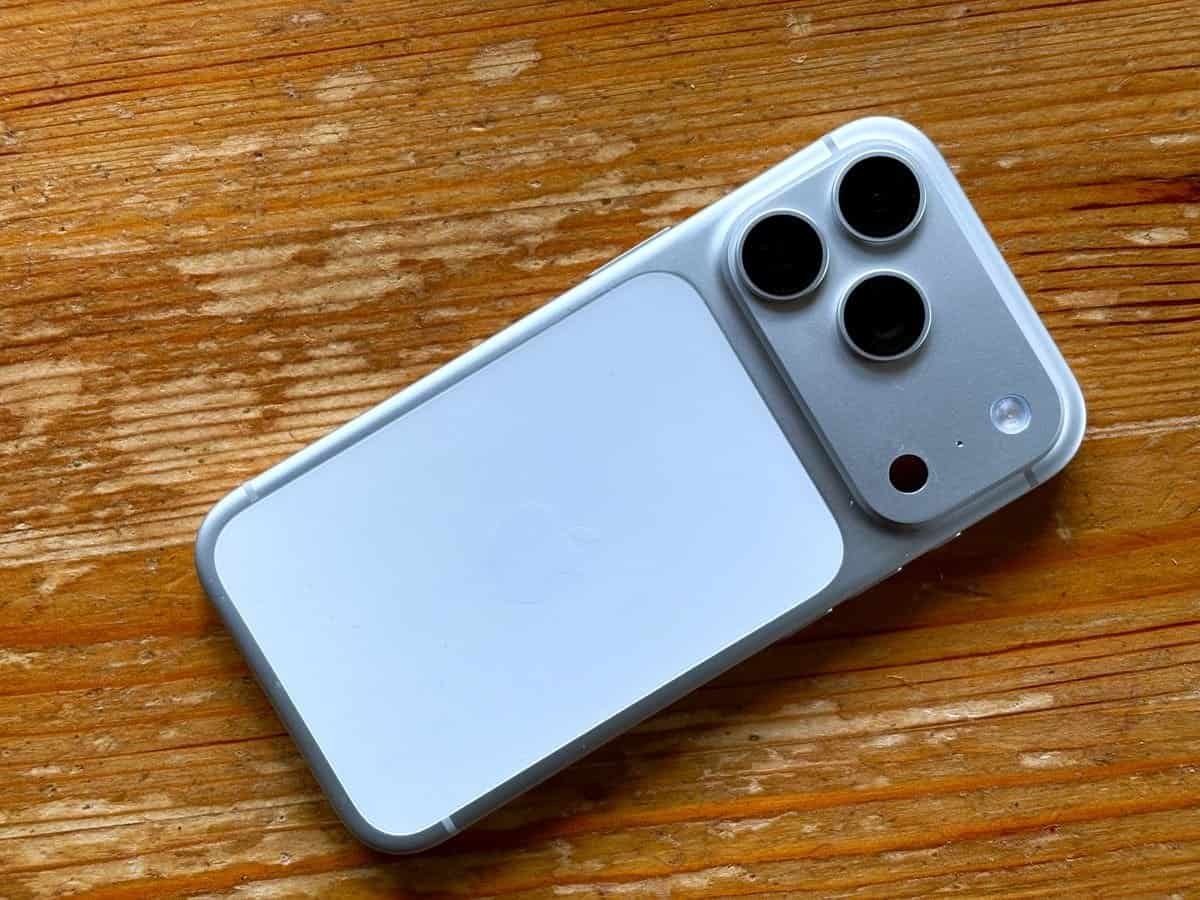
- Care most about the camera. The Duo has two rear cameras and no telephoto lens, while the 18 Pro adds a 4x telephoto and a variable-aperture main camera.
- Want Face ID. The Duo uses Touch ID only.
- Hate heavy phones. At 254 grams, the Duo is heavier than the iPhone 18 Pro Max (249 grams).
- Use the Action button every day. The Duo doesn’t have one.
- Depend on apps that haven’t been updated for the big screen. Several reviewers say unoptimized apps still look awkward (more on that below).
- Don’t want to take a chance on a first-generation hinge and folding screen
On Touch ID versus Face ID, there’s also a security angle. Neither method stops a thief who has watched you type your passcode. Our explainer on how thieves exploit your iPhone passcode and Face ID explains the risk and how to protect yourself, whichever phone you buy.
iPhone Duo vs iPhone 18 Pro
Both use the A20 Pro chip, so the differences are form factor, cameras and price. Figures from Apple’s Duo specs, iPhone 18 Pro specs and its buy-page comparison, as of Oct 23, 2026.
| Feature | iPhone Duo | iPhone 18 Pro |
|---|---|---|
| Starting price | $1,999 | $1,199 |
| Display | 7.6-inch inner folding + 5.4-inch outer | 6.3-inch (6.9-inch on 18 Pro Max) |
| Weight | 254 g | 211 g (249 g Pro Max) |
| Materials | Grade 5 titanium | Aluminum unibody |
| Chip | A20 Pro | A20 Pro |
| Rear cameras | 48MP Main + 48MP Ultra Wide | 48MP Main (variable aperture) + 48MP Ultra Wide + 48MP 4x Telephoto |
| Optical zoom options | .5x, 1x, 2x | .5x, 1x, 2x, 4x, 8x |
| Front camera | 12MP outer + under-display inner | 18MP Center Stage |
| Biometrics | Touch ID (side button) | Face ID |
| Action button | No | Yes |
| Video playback (Apple) | Up to 44 hrs (outer) / 31 hrs (inner) | Up to 36 hrs (45 hrs Pro Max) |
| Wired fast charge (Apple) | 50% in about 20 min (60W+ adapter) | 50% in about 15 min (60W+ adapter) |
| Water and dust | IP68 | IP68 |
Our take: the 18 Pro is $800 cheaper, lighter, and has the better camera and Face ID. Buy the Duo only if the big screen is the point.
iPhone Duo vs Samsung and Google foldables
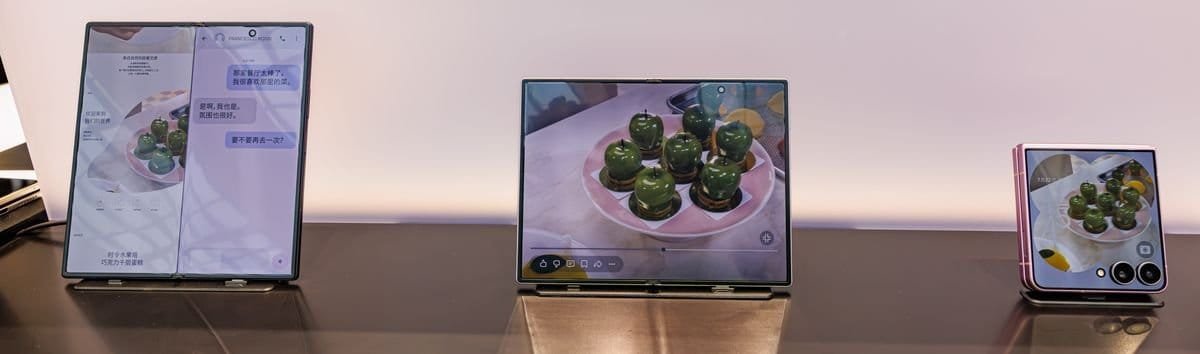
Apple is late to foldables, and both main rivals cost a bit less. Figures come from each company’s own pages as of Oct 23, 2026. Prices and promotions change often.
| Spec | iPhone Duo | Samsung Galaxy Z Fold8 | Google Pixel 11 Pro Fold |
|---|---|---|---|
| Starting US price | $1,999 | From $1,899.99 | $1,899 |
| Inner display | 7.6-inch | 7.6-inch | 8-inch |
| Outer display | 5.4-inch | 5.5-inch | 6.5-inch |
| Weight | 254 g | 201 g | See Google’s site |
| Battery | Up to 24 hrs typical use (Apple) | 4,800 mAh; up to 26 hrs video (Samsung) | 24+ hours (Google) |
| Water/dust rating | IP68 | IP48 | IP68 |
Sources: Samsung’s Galaxy Z Fold8 page, the Google Store and Google’s Aug. 12, 2026 announcement. Samsung also sells a larger Galaxy Z Fold8 Ultra. See Samsung’s site for its pricing.
What stands out: the Fold8 is about 53 grams lighter than the Duo, but its IP48 rating means much weaker dust protection than the Duo’s IP68. The Pixel has the biggest screens. The Duo’s advantages are iOS, the A20 Pro chip and Apple’s ecosystem, which matter more than a few grams if you already live on a Mac, Apple Watch and iMessage.
What early reviews say
Review embargoes lifted on Oct 21, 2026. Here’s what reviewers said, with links so you can read them yourself:
- Engadget (Sam Rutherford, Oct 21) scored it 8.8/10. The pros were design, performance, battery life and the nano-textured screen. The cons were “Heavy,” “Expensive” and “A lot of apps still need to be optimized.” Rutherford wrote that “the crease basically disappears” when you look at the screen head-on.
- WIRED, as quoted in Macworld’s Oct 21 review roundup, said the crease “is hardly visible.” It also said “Several apps I’ve tried to open on the sprawling 7.6-inch screen look awful.”
- The Verge, per the same roundup, said the battery “doesn’t seem ready to last a full day of heavy use” and that the camera “relies on heavier sharpening.”
- Tom’s Guide, per Macworld, called it “a big deal that the iPhone Duo doesn’t have a telephoto lens” and said non-optimized apps “can range from looking a bit off to horrible.”
The pattern: reviewers like the hardware and the barely visible crease, and they complain about the weight, the missing telephoto and apps that haven’t caught up. Battery results vary. Watch for follow-up reviews on hinge and crease durability after a few months of use.
Confirmed vs. speculation
Here’s what’s confirmed and what isn’t, as of Oct 23, 2026.
| Claim | Status | Source and date |
|---|---|---|
| Starts at $1,999; on sale Oct 23 | Confirmed | Apple Newsroom, Sept 9, 2026; apple.com, Oct 23, 2026 |
| Touch ID, no Face ID | Confirmed | Apple specs page, Oct 23, 2026 |
| Apple Pencil (USB-C) support | Confirmed, but coming “later this year” | Apple Newsroom, Sept 9, 2026 |
| Third-party apps like Netflix, Zoom and Slack adapted | Confirmed (Apple says) | Apple Newsroom, Sept 9, 2026 |
| iPhone Duo 2 prototypes testing under-display Face ID | Reported | Mark Gurman, Bloomberg Power On podcast, via Macworld, Oct 22, 2026 |
| Apple will cut the Duo’s price for Black Friday | Speculation | No official source |
| Specific hinge fold-cycle rating | Unverified | Apple hasn’t published one |
On the Duo 2: Gurman said he expects Face ID to return “by the first update or the second update.” That’s a report, not an Apple commitment.
Accessories you’ll actually need
The only thing in the box with the phone is a 1-meter USB-C charge cable. There’s no power adapter. To get Apple’s claim of 50% in about 20 minutes, you need a 60W-capable (or higher) USB-C PD adapter and a USB-C cable rated for 60W or more.

A 65W USB-C charger clears Apple’s 60W requirement, and you can use it to charge a laptop or tablet too.
Anker Nano II 65W USB-C charger
Apple says the fast charge figure assumes a 60W-capable cable. A spare cable for your desk or car is handy, so look for one rated for 60W or 100W.
Apple 240W USB-C Woven Charge Cable (2 m)
The Duo supports MagSafe and Qi2 wireless charging at up to 25W. Apple says it reaches 50% in about 30 minutes on a MagSafe Charger paired with a 35W or higher adapter.
Apple MagSafe Charger (1 m)
A magnetic power bank helps on long days, since the inner screen drains the battery faster (31 hours of video versus 44, per Apple). For more picks, see our guide to the best power banks for travel in 2026.
UGREEN MagFlow Qi2 25W 10,000mAh magnetic power bank
Cases and screen protection
Apple sells two of its own cases: the iPhone Duo Case ($79, in sand or navy blue), a two-part design that wraps around both halves, and the iPhone Duo Folio with Kickstand ($129, in navy blue or taupe). Apple says both work with MagSafe, Qi2 25W and Qi chargers. If you buy a third-party case, make sure the listing says “iPhone Duo” by name. Cases for regular iPhones won’t fit.
Apple hasn’t published guidance on screen protectors for the inner folding display, so don’t stick a generic one on it. For the outer screen, use only a protector made specifically for the iPhone Duo.
AppleCare
Apple offers AppleCare+, AppleCare+ with Theft and Loss, and AppleCare One for the Duo. On a pricey first-generation foldable, accident coverage is worth a look. Apple’s Newsroom doesn’t list Duo-specific prices, so check at checkout on apple.com.
iPhone Duo FAQ
How much is the iPhone Duo?
$1,999 for 256GB, $2,199 for 512GB, $2,599 for 1TB and $3,199 for 2TB on apple.com, as of Oct 23, 2026.
When can I buy it?
Now. Pre-orders opened Oct 16, and the phone went on sale Friday, Oct 23, 2026. Supply is tight: Macworld reported on Oct 22 that online orders were backordered into January, with limited walk-in stock at Apple Stores on launch day.
Does it have Face ID?
No. It uses Touch ID in the side button, and you can also unlock it with an Apple Watch.
Is it waterproof?
It’s water resistant, not waterproof. It’s rated IP68 (up to 6 meters for 30 minutes), and Apple says liquid damage isn’t covered under warranty.
Does it work with Apple Pencil?
Apple says it will support Apple Pencil (USB-C) on either display “later this year.” It isn’t available at launch.
Does it come with a charger?
No. Only a USB-C cable comes in the box. For the fastest wired charging, you need a 60W-capable adapter.
Will it get cheaper on Black Friday?
Don’t count on an Apple price cut. Trade-in and carrier offers are the likelier savings; we’ll track them on our Black Friday tech deals page.
Should I wait for iPhone Duo 2?
If Face ID matters to you, maybe. But a Face ID Duo 2 is only a report for now, with no date from Apple.
Bottom line
The iPhone Duo is Apple’s most ambitious iPhone in years. Early reviews say the screen is excellent and the crease is barely visible, and you get the same A20 Pro chip as the iPhone 18 Pro. But at $1,999 and up, you’re paying extra for a heavier phone with fewer cameras, no Face ID and some apps that aren’t ready for the big screen yet.
If a pocketable tablet would change how you use your phone and the price won’t strain your budget, the Duo is a strong first try, especially with a good trade-in. Everyone else should buy the iPhone 18 Pro or wait a generation for apps, durability data and possibly Face ID to catch up.