









As an Amazon Associate, Early Bird Wins earns from qualifying purchases. We may earn a commission from links on this page at no extra cost to you.
Last updated: Oct 22, 2026
Not financial advice. This article explains publicly reported facts and how deals like this usually work. Talk to a licensed financial or tax professional before making investment decisions.
Short answer: no, SpaceX and Tesla have not agreed to merge. What changed this week is that a deal is now formally being studied. On SpaceX’s third-quarter earnings call on Oct. 20, 2026, Elon Musk said both companies’ boards have formed special committees of independent directors to look at a combination, and that the committees have not agreed on any terms.
On Tesla’s earnings call the next evening, Musk added nothing, and Tesla’s investor relations team took no merger questions. As of Oct. 22, neither company has filed a merger agreement with the SEC. Here is what is confirmed, what is speculation, and what it could mean if you own TSLA or SPCX.
Where things stand right now
The idea has floated around all year, and it got more concrete once SpaceX went public in June. For the earnings numbers, see our SpaceX Q3 2026 earnings breakdown.

The key dates so far:
- Feb. 2, 2026: SpaceX announced it had acquired xAI. That share-exchange deal is the closest precedent for a Musk-to-Musk merger (more below).
- June 12, 2026: SpaceX began trading on Nasdaq as SPCX after pricing its IPO at $135 a share and raising $75 billion, according to CBS News.
- Oct. 14, 2026: Barclays said a merger announcement was possible before December, as reported by Bloomberg.
- Oct. 19, 2026: Tesla filed its proxy statement for a Dec. 3 annual meeting. The ballot has three routine items and no merger vote.
- Oct. 20, 2026: On SpaceX’s Q3 call, Musk said both boards had formed special committees. Asked whether a merger would be a good idea, he said “Yes,” but cautioned against assuming it will happen (TechCrunch; Yahoo Finance).
- Oct. 21, 2026: On Tesla’s Q3 call, Musk said, “I think I said everything that should be said yesterday, tap dancing through a minefield there.” Tesla’s IR head said the company would not address merger questions (Investing.com transcript).
Confirmed vs. speculation
Much of what circulates on social media goes beyond what has been said or filed. “Confirmed” below means it was said on the record, not that it appears in an SEC filing.
| Claim | Status | Source and date |
|---|---|---|
| SpaceX and Tesla boards each formed special committees of independent directors | Confirmed (Musk, on the SpaceX call; not in a filing) | TechCrunch, Oct. 20, 2026 |
| The committees have not agreed on deal terms | Confirmed (Musk) | Stocktwits via Yahoo Finance, Oct. 21, 2026 |
| Tesla approval would need a majority of all outstanding shares, not just shares voted | Confirmed (Musk) | Stocktwits via Yahoo Finance, Oct. 21, 2026 |
| No merger agreement, S-4 or merger proxy has been filed | Confirmed (SEC EDGAR filing lists checked Oct. 22) | Tesla filings; SpaceX filings |
| Tesla’s Dec. 3 annual meeting includes a merger vote | False as of now (three routine items only) | Tesla proxy, Oct. 19, 2026 |
| SpaceX would be the buyer in an all-stock deal | Speculation (analyst view) | Barclays via Yahoo Finance, Oct. 21, 2026 |
| An announcement could come before the Dec. 3 meeting | Speculation (analyst view) | Barclays via Bloomberg/investingLive, Oct. 14, 2026 |
| A merger is a done deal | Not supported; Musk: “some people out there assume that a SpaceX and Tesla merger is a certainty. And I think that would be overstating it.” | Yahoo Finance, Oct. 21, 2026 |
The pattern is clear: the process is real, but price, structure and timing are all unknown. Anything claiming specific deal terms right now is guesswork.
How a SpaceX-Tesla merger would actually work
Because Musk controls SpaceX and is Tesla’s CEO and a major shareholder, he sits on both sides of any deal. That is why the boards set up special committees. Musk described it as “an odd kabuki dance” and said, “I can’t actually be in the discussions of the special committees” (TechCrunch). Committees like these typically hire their own bankers and lawyers and get fairness opinions before recommending anything.
Structure and who buys whom
Nothing has been proposed. Barclays analyst Dan Levy expects SpaceX to be the buyer in an all-stock deal, according to Yahoo Finance. In an all-stock deal, Tesla holders would swap each TSLA share for a fixed number of SPCX shares (the exchange ratio).
The xAI deal shows how Musk has done this before. CNBC reported that the February transaction was a share exchange converting each xAI share into 0.1433 SpaceX shares, valuing SpaceX at $1 trillion and xAI at $250 billion, based on documents CNBC viewed. This time both companies are public, so the process is far more formal.
Votes on both sides
On the Tesla side, Musk said approval would need a majority of all outstanding shares, which he called “quite a high hurdle” (Yahoo Finance). Shares that never vote effectively count as “no.” Musk owns about 20% of Tesla, per Barclays.
The SpaceX side is easier. Barclays estimates Musk owns about 48% of SpaceX but controls about 82% of the vote. Fortune puts his economic stake near 45% and notes his Class B shares carry 10 votes each. Whether the committees will add a “majority of the minority” condition, which excludes Musk’s own shares, has not been disclosed.
Texas law, filings and regulators
Both companies are Texas corporations. Tesla’s shareholders approved the move from Delaware in June 2024, and SpaceX lists Texas as its state of incorporation in its Oct. 20 8-K. This matters for small investors. In May 2025, Tesla adopted a bylaw requiring 3% ownership to bring a derivative lawsuit, and Fortune reports SpaceX’s charter has a similar 3% limit plus mandatory arbitration. A SolarCity-style lawsuit by a small holder would be much harder this time.
If terms are agreed, expect an S-4 registration statement and joint proxy filed with the SEC, then shareholder meetings after SEC review. A deal this size would typically also need antitrust review, and SpaceX’s government work could draw extra scrutiny. That is our read of how such deals usually go, not something either company has said.
Timeline (estimate)
Barclays’ Levy said that if an announcement slips into late October or early November, approval at the Dec. 3 meeting gets harder, and a deal could instead come within six to 12 months (Yahoo Finance). Our own estimate, not a forecast: with no terms yet and SEC review usually taking months, a closing before mid-2027 looks ambitious even if a deal is announced soon.
Valuation: what the two companies are worth
At the Oct. 21 close, SPCX ended at $159.31, up 7.8% on the day, and TSLA closed at $386.47, up 3.4%, according to Yahoo Finance quote data for SPCX and TSLA. TSLA then slipped about 2% in after-hours trading during Tesla’s call, per Investing.com. Yahoo Finance put SpaceX’s value at about $2.1 trillion and Tesla’s at about $1.5 trillion on Oct. 21, and Fortune sized a combination at about $3.5 trillion. Those figures move daily.
SpaceX’s quarter gave the bulls fuel: its earnings release showed revenue of $14.6 billion, up 161% from a year earlier (details in our SpaceX Q3 recap). Tesla reported revenue of $28.05 billion and adjusted EPS of $0.48, and Electrek noted a $142 million unrealized loss on Tesla’s SpaceX stake.
Barclays estimates that if SpaceX bought Tesla at current values, Musk would own about 37% of the combined company and control about 56% of the vote (Yahoo Finance).
Why Musk might want it, and the case against
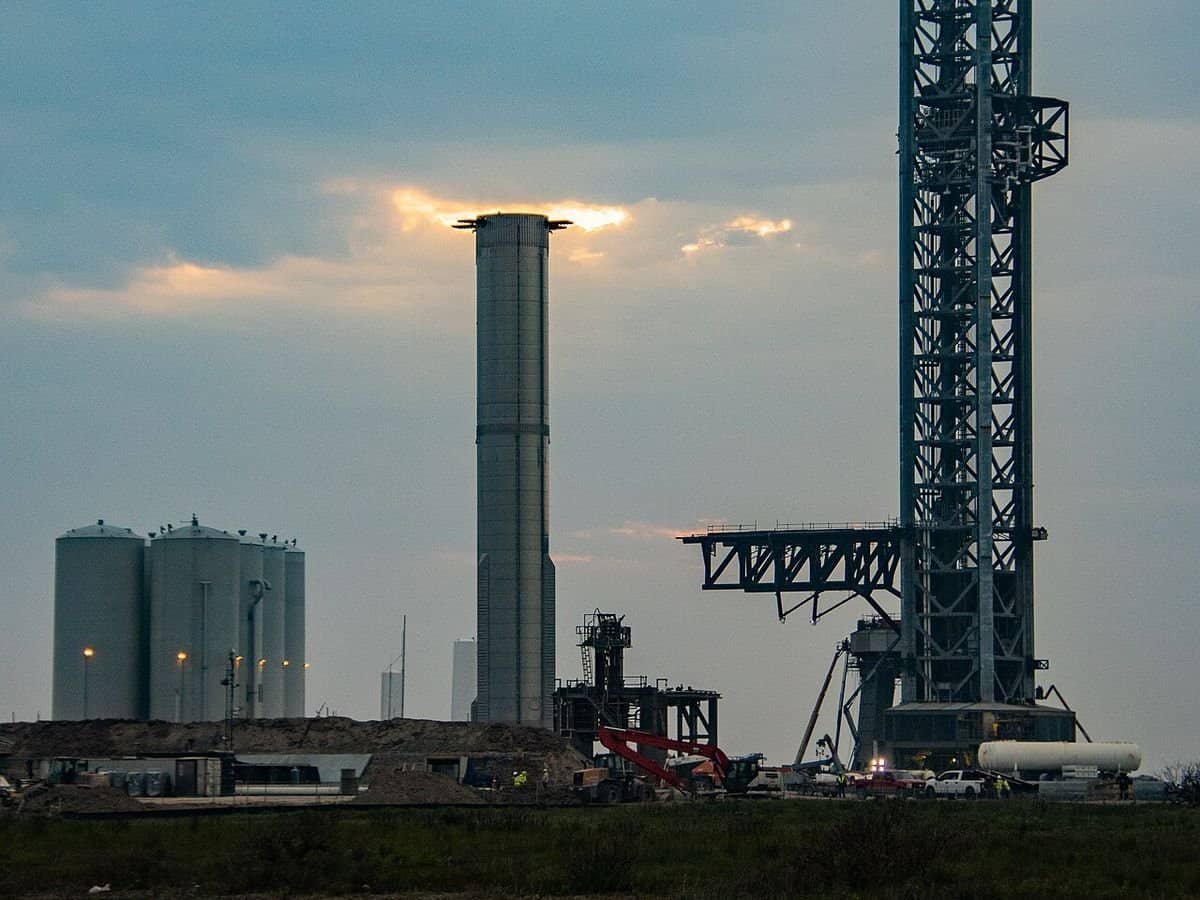
Musk said there is “a lot of merit to combining the companies” and pointed to overlap in AI software, robotics, Starmind (SpaceX’s orbital AI data center project) and Terafab, the joint Tesla-SpaceX chip manufacturing effort (TechCrunch). On Tesla’s call he said the long-term cost of Terafab will “probably be north of $100 billion” and that the companies still have to “figure out what the relative split is between SpaceX and Tesla in terms of who pays for what” (Investing.com). A merger would make that cost-sharing question go away.
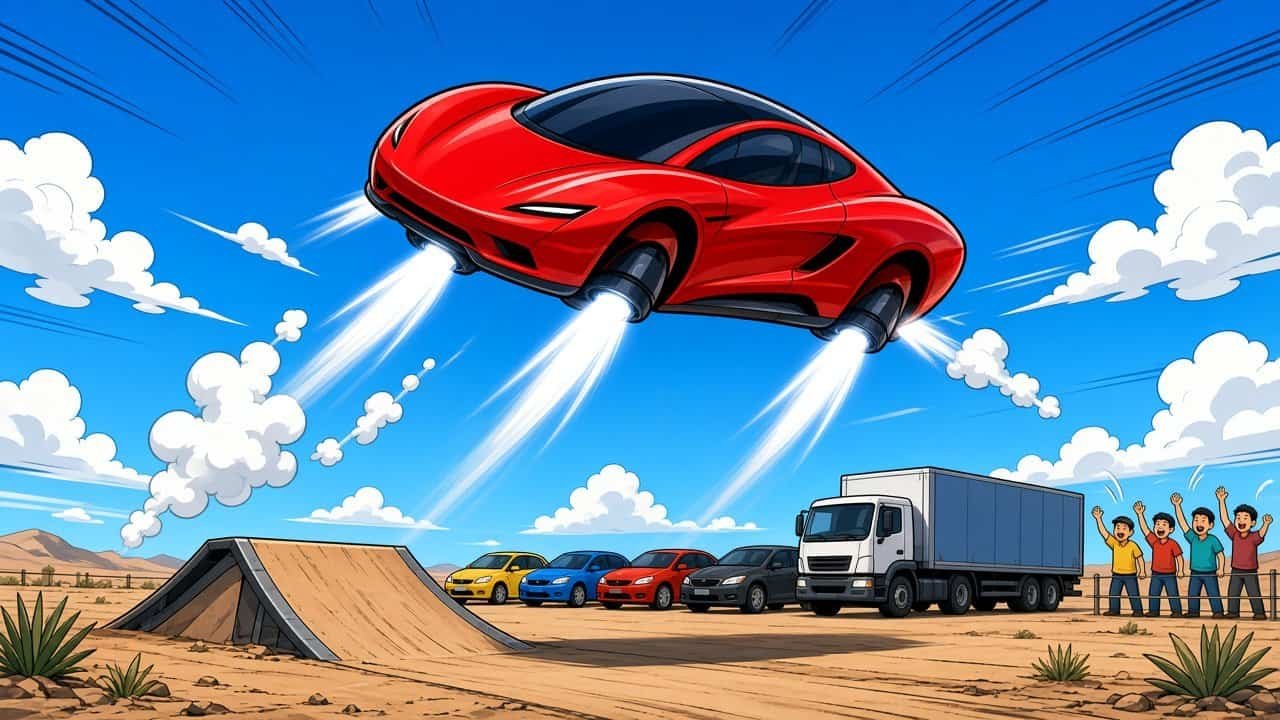
The companies already share hardware. Tesla’s new Roadster demo was built to show off a SpaceX cold gas thruster system, and on Tesla’s Q3 call Musk called it “a testament to amazing work by the Tesla and SpaceX teams.” We covered it in what the flying Roadster really means.
The case against is mostly about governance. Every deal between Musk companies is a related-party deal; Fortune reports Tesla did more than $573 million of business with Musk-controlled companies in fiscal 2025. Tesla shareholders have pushed back before: a November 2025 advisory vote on investing in xAI did not pass because abstentions counted as votes against, though Tesla agreed in January 2026 to invest $2 billion anyway. Other concerns include dilution, key-person risk around Musk and mixing a car company with a defense contractor.
There is also history. Tesla’s 2016 purchase of SolarCity, then chaired by Musk, led to years of litigation before the Delaware Supreme Court ruled in June 2023 that the deal was “entirely fair,” even though the process was imperfect. Expect the same questions about process this time.
What it could mean for TSLA holders and retail investors
If SpaceX buys Tesla in stock, TSLA holders become SPCX holders. Whether that is a good trade depends on the exchange ratio and whether it carries a premium over Tesla’s market price.
Exchange ratio math (hypothetical)
Hypothetical round numbers, not proposed terms: say TSLA trades at $380 and SPCX at $160. A no-premium ratio would be 380 / 160 = 2.375, so 100 TSLA shares would become 237 SPCX shares plus cash for the half share. With a 10% premium, the ratio is 2.6125, or 261 shares plus cash. Once a fixed ratio is set, your value moves with SPCX, not TSLA.
Taxes, funds and voting
All-stock mergers are typically structured as tax-free reorganizations, so you usually would not owe tax until you sell the new shares, though cash for fractional shares can be taxable. It depends on the final terms, so check with a tax adviser. If you own TSLA through an index fund or ETF, the fund votes for you. Listed options are usually adjusted to deliver the new shares. Direct holders get a proxy and a vote, and not voting counts against the deal.
Practical checklist
- Watch for an 8-K or Form 425 from either company. That is how real terms would surface.
- If an S-4 is filed, read the fairness opinions and the “background of the merger” section.
- Check whether a majority-of-the-minority vote is required.
- Note the Dec. 3 Tesla annual meeting (record date Oct. 13). As of now there is no merger vote on it.
- Do not buy either stock just to bet on a deal. Musk himself said there is no guarantee.
Risks
The biggest risks for investors right now:
- No deal: the committees may never agree, and merger hopes could drain out of both stocks.
- Bad terms: a low or no-premium exchange ratio could leave Tesla holders worse off.
- Vote failure: Tesla needs a majority of all outstanding shares, including shares that never vote.
- Governance: SpaceX’s dual-class structure would give public Tesla holders less say than they have today.
- Volatility: SPCX traded as high as about $226 after its IPO before falling back (Yahoo Finance).
- Regulatory and legal: reviews and possible lawsuits could delay or reshape a deal.
Further reading: for background on how Musk runs his companies, Walter Isaacson’s 2023 biography “Elon Musk” covers the SolarCity deal and the overlap among his businesses. It predates SpaceX’s IPO, so pair it with recent filings.
Elon Musk by Walter Isaacson (hardcover)
FAQ
Are SpaceX and Tesla merging?
Not yet. Both boards have formed special committees to study a possible merger, according to Musk, but no terms have been agreed and nothing has been filed with the SEC.
Can I buy SpaceX stock?
Yes. SpaceX has traded publicly since June 12, 2026, so any regular brokerage account can buy it.
What ticker is SpaceX?
SPCX, listed on Nasdaq, per SpaceX’s SEC filings. Tesla trades as TSLA, also on Nasdaq.
Would Tesla shareholders get SpaceX shares?
In an all-stock deal with SpaceX as buyer, as Barclays expects, yes, at a set ratio. No structure has been proposed.
Do Tesla shareholders get a vote?
Yes. Musk said Tesla approval would need a majority of all outstanding shares. SpaceX shareholders would likely vote too, but Musk controls most SpaceX votes, so that side is the easier one.
When could a merger happen?
Nobody knows. Barclays has floated an announcement before the Dec. 3 Tesla meeting or within six to 12 months. Closing would take longer.
Is it a good idea to buy TSLA or SPCX now?
We cannot tell you that, and this is not financial advice. A deal is uncertain, both stocks are volatile, and final terms will decide who benefits.
Bottom line
The SpaceX-Tesla merger has moved from rumor to formal study, and that is all. Independent committees are talking, Musk is publicly in favor but walled off, and Tesla said nothing new on its Oct. 21 call.
For investors, the real news will be a filing with an exchange ratio. Until then, own TSLA or SPCX for what each company is today, not for a deal that may not happen.