





As an Amazon Associate, Early Bird Wins earns from qualifying purchases. We may also earn from other affiliate links on this page at no extra cost to you.
Last updated: Nov 2, 2026 (8:05am SGT / Nov 1, 7:05pm ET). This is a developing story; we will update it as Binance publishes its post-mortem.
Update, Nov 2, 2026 (8:05am SGT / Nov 1, 7:05pm ET):
- Withdrawals have reopened, in phases: per Binance’s Recovery Update #4, phase one began Nov 1 between 06:00 and 09:00 UTC, starting with the Bitcoin network, and covers 15 networks (BTC, ETH, BSC, TRX, SOL, XRP, ZEC, DOGE, TON, Polygon, AVAX C-Chain, Arbitrum, Base, Optimism and SUI) for selected assets. Other networks and tokens will follow later. Some networks may still show as partially suspended, and Binance warns of delays; check the withdrawal page or network status page for your asset.
- About 95%% covered: Binance says it has now covered about 95%% of the impacted amount (up from 90%%), and the remaining 5%% is less-liquid tokens outside the 10 fully backed assets. It says users will not bear the loss.
- First-day outflow: Binance reported $4.6 billion in withdrawals and $1.0 billion in deposits between 06:00 and 15:30 UTC on Nov 1, a net outflow of $3.6 billion, which it put at 2.1% of assets under management (via TechCrunch).
- Proof of reserves: the Oct 31 snapshot is on Binance’s PoR page; the full zero-knowledge proof that lets you check your own balance is expected by Nov 3 (UTC). Binance also says it will publish a detailed incident report when its investigation is complete.
- Scam warning: Binance has called out fake “$150 compensation” screenshots circulating after the freeze. Ignore unsolicited “support” messages and links; use only the official app or binance.com.
Update, Nov 1, 2026 (8:45am SGT / Oct 31, 8:45pm ET):
- 90% replenished: In Binance Update #3 (posted Oct 31, 10:30am ET / 14:30 UTC), Binance says it has replenished 90% of the stolen assets using part of its SAFU fund, its Futures Insurance Fund and corporate treasury. It says the remaining 10% is mostly less-liquid tokens.
- Fully backed tokens: Binance says 10 assets are now fully backed: BTC, ETH, USDT, BNB, SOL, USDC, XRP, USD1, RLUSD and ZEC.
- Proof of reserves: a reserves snapshot was taken at 00:00 UTC on Oct 31. Binance says the zero-knowledge verification takes 40-50 hours, so customers should be able to check their own balances around Nov 2-3 rather than on the earlier Nov 2 report target.
- Withdrawals: still paused as of 8:30pm ET Oct 31. Binance says the restart remains on track for Sunday, Nov 1, but has not given a time. This is a target, not a guarantee; we will update when withdrawals actually reopen.
- Scam warning: expect fake “withdrawal unlock” and “Binance support” messages. Binance will not ask for your password, 2FA codes or seed phrase; use only the official app or binance.com.
Update, Oct 31, 2026 (8:45am SGT / Oct 30, 8:45pm ET):
- Size: Blockchain analytics firm TRM Labs puts the theft at about $6.36 billion across 10 blockchains, most of it moved in about 20 minutes from 20:05 UTC on Oct 29. Binance now says it has reserved more than $6.34 billion of company funds to cover the incident, and about $3 billion has been frozen with partners. (TRM Labs)
- How it happened (Binance’s initial account): a compromised DevOps engineer’s laptop gave the attacker access to a service container, and Ethereum’s EIP-7702 delegation was used to gain control of one hot wallet. Binance says there is no evidence of a private key leak and that what was affected was “Binance’s own hot wallet.” (BleepingComputer, CoinDesk)
- Who: TRM Labs and Chainalysis attribute the attack with high confidence to North Korea’s TraderTraitor group. Binance itself has not attributed it. (Decrypt)
- Withdrawals: still paused as of Oct 30 evening ET. Binance is targeting a restart by Sunday, Nov 1, but only once the rebuilt withdrawal service passes testing, and a full proof-of-reserves report is targeted for Mon, Nov 2. These are targets, not guarantees. Deposits are operating normally. (CNBC)
Wondering where your coins should live? Read our guide: Hot wallet vs cold wallet, and how to move crypto to cold storage safely.
Quick answer
- What happened: On Thursday, Oct 29, 2026, on-chain analysts flagged billions of dollars in crypto moving out of Binance hot wallets to a newly created Ethereum address. Binance called it a “security incident” and is investigating.
- How big: Binance has not confirmed a stolen amount. It says $2.54 billion has been verified as frozen. Outside estimates of the outflows run from at least $2 billion to roughly $5.8 billion. Those figures are not confirmed.
- Your funds: Binance says user funds are safe and that “Binance will cover all losses.” Co-founder Yi He has promised a full post-mortem.
- Paused: As of Oct 30, 2026, 8:30am SGT, all Binance deposits and withdrawals are temporarily suspended. Binance has not given a time for them to resume.
- Binance.US: Binance.US is a separate exchange. It told Reuters it was not affected.
- What to do now: Don’t panic-sell. Ignore any “refund” or “unlock” messages. Secure your login with a passkey or security key. Plan to move long-term holdings to self-custody once withdrawals reopen and things are calm.
What happened at Binance
On Thursday afternoon, US time, blockchain watchers spotted unusually large transfers out of Binance’s hot wallets, the internet-connected wallets exchanges use for withdrawals. According to analysis cited by BleepingComputer, one wallet labeled “Binance 14” sent roughly $2.53 billion across 64 tokens to a new Ethereum address. A second wallet sent $174.4 million to the same address 24 seconds later. Here is how things unfolded (all times Oct 29, 2026 unless noted; ET is US Eastern Daylight Time):

- About 21:50 UTC (5:50pm ET): Binance founder and former CEO Changpeng Zhao (CZ), who no longer runs the company, posted on X that it “does look like a hack on Binance.” He said user funds are safe and that he expects them to be fully covered. Those are his personal views, not an official Binance finding.
- 22:15 and 22:33 UTC (6:15pm and 6:33pm ET): Binance posted on X: “Our team is conducting security checks. Withdrawals will resume as soon as the security issue is fully resolved. User funds remain safe.”
- Around 22:27 UTC (6:27pm ET): TechCrunch reported that a Binance spokesperson confirmed the exchange had “temporarily suspended withdrawals on multiple networks following a security incident as a precautionary measure.”
- 23:06 UTC (7:06pm ET): Binance temporarily suspended Binance Alpha trading.
- 23:22 UTC (7:22pm ET): Binance said “the current verified total frozen is $2.54 billion,” adding the figure may increase.
- 00:04 UTC Oct 30 (8:04pm ET Oct 29): Co-founder Yi He wrote: “User funds are safe. Binance will cover all hacking losses… We will share a full post-mortem once the investigation is complete.”
- 00:13 UTC Oct 30 (8:13pm ET Oct 29): Binance said “Binance will cover all losses” and that all deposits and withdrawals are temporarily suspended while it runs security checks, freezes funds and works with law enforcement.
Stablecoin issuers moved quickly too. Tether CEO Paolo Ardoino said the company froze more than 1.567 billion USDT, and Circle CEO Jeremy Allaire said Circle froze more than 800 million USDC. Yi He said Ripple helped freeze about $200 million, and World Liberty Financial said it froze $27 million in USD1. Binance says it has more than 335 million registered users.
What is confirmed and what is not
Breaking stories mix official statements with fast-moving estimates. The table below keeps them apart. “Confirmed” means Binance or the company involved said it publicly. “Reported” means it comes from on-chain analysts or news reports and Binance has not verified it. Status is as of Oct 30, 2026, 8:30am SGT.
| Claim | Status | Source |
|---|---|---|
| Suspicious outflows from Binance hot wallets | Confirmed as a “security incident” | Binance via TechCrunch, BleepingComputer |
| Deposits and withdrawals paused | Confirmed | Binance on X (00:13 UTC Oct 30) |
| $2.54 billion verified frozen | Confirmed (may rise) | Binance on X, CNBC |
| Tether froze 1.567B+ USDT | Confirmed | Tether CEO via BleepingComputer |
| Circle froze 800M+ USDC | Confirmed | Circle CEO via CNBC |
| Ripple helped freeze about $200M | Confirmed by Binance’s Yi He | Yi He on X, CNBC |
| Total amount stolen | Not confirmed (estimates from $2B to about $5.8B) | TechCrunch, BleepingComputer, Arkham |
| Cause and attacker | Not disclosed / unknown | TechCrunch |
| Binance.US affected | No, per Binance.US | Reuters |
You may see “$5.8 billion” in headlines. That number comes from Arkham Intelligence, which groups 55 addresses under an entity it calls “binance-hacker-1029.” Their combined holdings were roughly $5.78 billion to $5.84 billion, including about $1.77 billion in USDT and $1.44 billion in bitcoin. As BleepingComputer notes, that is a snapshot of what those wallets hold, not a confirmed amount stolen from Binance. It can also include stablecoins that have since been frozen.
Other estimates vary. TechCrunch cited crypto watchers saying at least $2 billion was drained, and a later analyst update put the outflows at about $3.48 billion. CNBC noted that frozen funds “could represent only a fraction” of those affected. If confirmed in the billions, this would top the roughly $1.5 billion Bybit hack of February 2025, the largest confirmed crypto theft on record. For now, nobody outside Binance knows the final number.
Is your crypto safe on Binance?
Binance’s official position is clear: “User funds are safe,” and “Binance will cover all losses.” The outflows appear to have come from Binance’s own hot wallets, not individual customer accounts. If Binance pays as promised, your account balance should not change. Freezes by Tether, Circle and others also limit what the attacker can use.
Binance does have a track record. It created its Secure Asset Fund for Users (SAFU) in July 2018, funded with a share of trading fees, for extreme cases. In May 2019, hackers stole 7,000 BTC (about $40 million then) from a Binance hot wallet, and Binance covered it from SAFU. But a loss in the billions would be far bigger, and Binance has not said whether SAFU, reserves or recovered funds would pay for it. “Covered” depends on Binance’s balance sheet, how much gets frozen or recovered, and how long the investigation takes.
US readers should also know that crypto held on an exchange is not FDIC insured, so there is no government backstop like the one for a bank account. Binance.US, which is run separately from the global exchange, says it was not affected. Still, the point applies to every exchange: when a company holds your keys, you are only as safe as its security and finances.
How the market reacted
Prices dropped as the news spread. As of about 00:25 UTC Oct 30 (8:25pm ET Oct 29), CoinGecko showed bitcoin at roughly $77,800, down about 4.2% over 24 hours. Ether was around $2,244 (down about 4.8%), and Binance’s BNB token was near $695 (down about 8.5%). These figures are approximate and change quickly. Posts on X reported roughly $600 million in long liquidations within one hour during the drop. That figure has not been independently confirmed.

If you are tempted to trade on these headlines, slow down. Moves like this are often driven by forced liquidations and fear rather than new information. Selling into a sharp drop makes a temporary paper loss permanent. We don’t make price predictions, and nobody can reliably time a market reacting to a story still in progress.
What to do right now if you use Binance (or any exchange)
None of these steps require moving funds today. They apply to Binance or any other exchange.

- Don’t panic-sell. Binance says balances are safe and losses will be covered. Selling at a low point because of a headline is often the costliest mistake in moments like this.
- Use only the official app or site. Type the address yourself or use a bookmark you saved earlier. Don’t click links in search ads, emails or social posts. Fake “Binance” sites always multiply after big news.
- Ignore DMs, calls and “refund” forms. Binance warns users not to trust unofficial links, messages or requests for account information. No real exchange, support agent or police officer will ever ask for your seed phrase, password or 2FA codes. A “withdrawal unlock” or “compensation claim” link is a scam.
- Upgrade your login security. Turn on a passkey or a hardware security key such as a YubiKey, and remove SMS codes as a 2FA option if you can. SMS can be hijacked through SIM-swap scams.
- Turn on a withdrawal address allowlist. Most major exchanges let you limit withdrawals to addresses you have approved. Even if someone gets into your account, it is much harder for them to send your coins elsewhere.
- Save your records. Take screenshots of your balances and download your transaction history now. You may need them for any claim and for taxes.
- When withdrawals reopen, move long-term holdings to self-custody, one step at a time. Don’t rush on the first day, when networks are busy and scammers are active. Send a small test transaction first, confirm it arrives, then move the rest.
- Keep only trading money on exchanges. If you trade actively, spreading that money across two reputable exchanges can limit disruption. Spreading savings across exchanges doesn’t fix custody risk. Self-custody does.
If you already clicked a suspicious link or shared a code, change your password from the official app right away. Then reset your 2FA and contact support through the app.
Exchange vs self-custody: which is right for you?
“Not your keys, not your coins” is an old crypto saying, and this week shows why. When your crypto sits on an exchange, the exchange controls the private keys and you have an IOU. With self-custody, you hold the keys yourself, usually as a 12- or 24-word recovery phrase (also called a seed phrase).

| Option | Who controls keys | Main risk | Best for |
|---|---|---|---|
| Exchange account | The exchange | Exchange hack, freeze or failure | Active trading, small balances |
| Software wallet on phone | You | Phone malware, phishing, lost phone without backup | Small everyday amounts |
| Hardware wallet | You (keys stay on the device) | Losing or exposing your seed phrase, tampered devices | Long-term holdings |
| Hardware wallet + metal/offline backup | You | Mistakes in storing or securing the backup | Larger long-term holdings |
Self-custody removes exchange risk, but it adds personal responsibility. If you lose your seed phrase and your device breaks, nobody can recover your funds. If someone else gets your seed phrase, they can take everything. Write it on paper or metal, store it somewhere safe, and never type it into a website, phone or cloud note.
For many people, the sensible middle ground is a small trading balance on a well-run exchange with strong 2FA, and savings on a hardware wallet. Build that habit over time rather than rushing it tonight.
How to buy a hardware wallet safely after the Ledger tampering cases
A hardware wallet only protects you if the device is genuine. On Oct 28, 2026, the Singapore Police Force warned that Ledger devices bought from some Singapore retail stores had been fitted with malicious hardware that captured recovery phrases. Police counted at least two cases since Sep 10 and about S$3.5 million in losses. Earlier in October, Ledger said it had traced the confirmed cases to a Southeast Asian reseller, CryptoBilis. The implant read the 24-word phrase during setup and sent it out over a cellular (LTE) connection.
The lesson applies to every brand, not just Ledger:
- Buy directly from the manufacturer or its official storefront. On Amazon, check that “Ships from” and “Sold by” show Amazon or the brand’s official store, not an unknown third-party seller.
- Run the manufacturer’s genuine check in its official app during setup.
- Never use a device that comes with a pre-written seed phrase or a PIN already set. Always create a new phrase yourself.
- If the packaging looks opened or something seems off, stop and contact the manufacturer.
Our full guide on how to buy a hardware wallet safely goes deeper, and our Ledger vs Trezor comparison can help you choose. If you’re not in a hurry, check our hardware wallet Black Friday tracker. As of Oct 25, 2026, neither brand had announced Black Friday 2026 offers. Black Friday is Nov 27, 2026, and our Black Friday and Cyber Monday tech deals hub will track them.
What we recommend
You don’t need to buy anything today, because withdrawals are paused and a calm setup beats a rushed one. If you plan to move long-term crypto into self-custody, these are sensible options. A security key is worth having either way. Check current price before you buy.
| Pick | Best for | Why it fits |
|---|---|---|
| Trezor Safe 3 | First hardware wallet | Simple, secure-element design at an entry-level price point |
| Trezor Safe 5 | Easier everyday use | Color touchscreen makes checking addresses and confirming transactions easier |
| Ledger Nano X | Mobile users | Bluetooth works with the Ledger phone app; buy only from official sellers |
| YubiKey 5C NFC | Locking down exchange and email logins | Phishing-resistant passkey/FIDO2 key that works over USB-C and NFC |
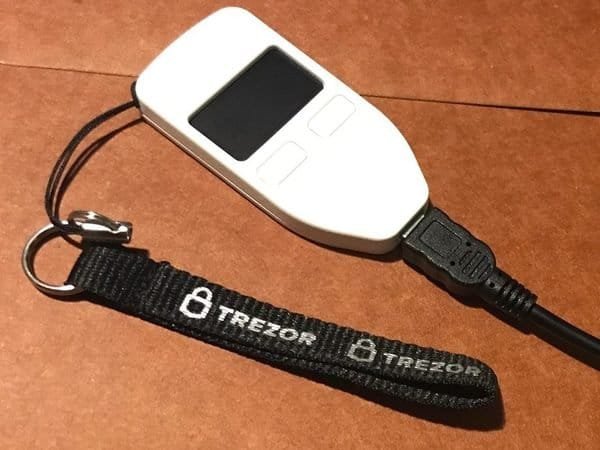
Trezor hardware wallet (item type; older Trezor One shown). Photo: Sanjev Rajaram, CC BY-SA 4.0, via Wikimedia Commons (resized)
Trezor Safe 3 hardware wallet
Solid first hardware wallet; confirm Sold by Amazon or the official Trezor store.
Check price on Amazon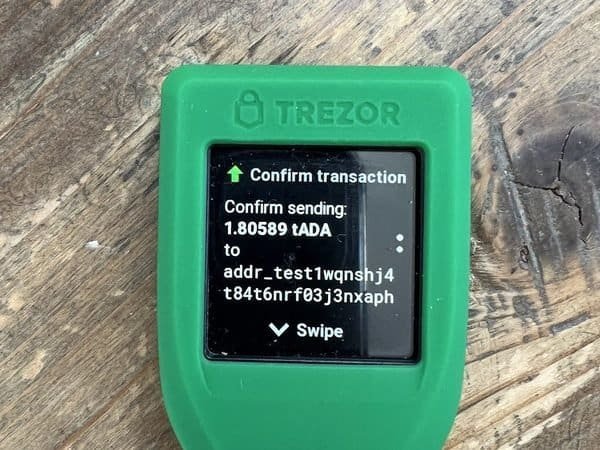
Touchscreen Trezor (item type; Model T shown, not the Safe 5). Photo: FlippyFlink, CC0, via Wikimedia Commons (resized)
Trezor Safe 5 hardware wallet (touchscreen)
Touchscreen makes verifying addresses easier; check the seller before you buy.
Check price on Amazon
Ledger hardware wallet (item type photo). Photo: Roderart, CC BY-SA 4.0, via Wikimedia Commons (resized)
Ledger Nano X hardware wallet (Bluetooth)
Bluetooth for phone use; buy only from Amazon or Ledger's official store and run the genuine check.
Check price on Amazon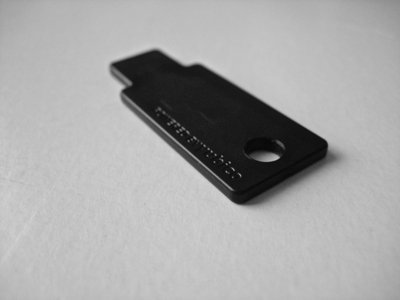
YubiKey security key (item type photo). Photo: Jonathan Molina, CC BY-SA 2.0, via Wikimedia Commons (resized)
Yubico YubiKey 5C NFC security key
Phishing-resistant passkey key for exchange and email logins; buy two and keep one as a backup.
Check price on AmazonFor more on choosing a key, see our guide to the best YubiKey in 2026.
Lessons from past exchange hacks
Exchange incidents are not new, and how they ended has varied a lot. Mt. Gox, once the biggest bitcoin exchange, collapsed in 2014 after losing hundreds of thousands of bitcoin. Customers waited about a decade for partial repayments. In May 2019, Binance lost 7,000 BTC from a hot wallet and covered it in full from SAFU. FTX’s collapse in November 2022 was not a hack. Customer funds were misused, and the exchange went bankrupt. In February 2025, Bybit lost about $1.5 billion in ether, which the FBI attributed to North Korea. Bybit stayed open and said it had restored its reserves.
The pattern is consistent. Exchange hot wallets hold large sums online, so they are prime targets. Some exchanges absorb the loss, some take years to repay partially, and some never recover. You can’t control an exchange’s security, but you can control how much of your money depends on it. Self-custody removes exchange risk and adds personal responsibility for your keys.
FAQ
Was Binance hacked?
Binance has confirmed a “security incident,” and Yi He referred to covering “all hacking losses.” As of Oct 30, 2026, 8:30am SGT, Binance had not said how it happened.
How much was stolen?
Binance has not confirmed a stolen amount. It says $2.54 billion has been verified as frozen. Outside estimates range from at least $2 billion to about $5.8 billion. The $5.8 billion figure is Arkham’s snapshot of holdings in linked wallets, not a confirmed loss.
Is my money safe on Binance?
Binance says user funds are safe and that it will cover all losses. Exchange balances are not FDIC insured, so this depends on Binance following through.
When will Binance withdrawals resume?
Binance has not given a time. It says withdrawals will resume “as soon as the security issue is fully resolved.” Be wary of anyone who claims to know a date or offers to “unlock” your withdrawal for a fee.
Is Binance.US affected?
No, according to Binance.US, which told Reuters it was not affected. Binance.US is a separate exchange from global Binance.
Should I move my crypto off Binance?
You can’t right now, because withdrawals are paused. Once they reopen and things settle, consider moving long-term holdings to a wallet you control, starting with a small test transaction.
Is it safe to buy a hardware wallet on Amazon?
It can be, if “Ships from” and “Sold by” show Amazon or the brand’s official store. Buying direct from the manufacturer is safest. Always run the genuine check and never use a pre-written seed phrase.
Bottom line
This could become the largest crypto theft on record, but key facts are still open. Binance says user funds are safe and it will cover all losses. The stolen amount, cause and restart time are unconfirmed. Stay calm, ignore anyone promising refunds or unlocks, and lock down your exchange login with a passkey or security key.
Longer term, use this as a reminder to keep only trading money on exchanges and move savings to a hardware wallet you bought from a trusted source. Set it up carefully, and protect your seed phrase. This is not financial advice; prices and availability change.


