








The end of three decades of near zero interest rates in Japan is not just a headline. It is a structural shift that rewires global liquidity. The Japan carry trade that pumped trillions into overseas markets for years is unwinding, and that reversal creates a new set of winners and losers. One often-overlooked winner could be XRP, an asset built for fast settlement and crossborder liquidity. This article walks through exactly how the Japan carry trade worked, why its reversal matters, and the plausible pathways through which utility-driven demand could materially revalue XRP.
Table of Contents
- Why the change in Japan matters right now
- What the Japan carry trade was, in plain terms
- How the reverse carry trade ripples through markets
- Why XRP fits into a liquidity-driven environment
- How utility actually creates price floors
- Four-tier framework: routes to revaluation for XRP
- Mechanics that actually drive these moves
- Key indicators to watch
- How to think about risk and portfolio positioning
- Common misconceptions about utility-driven repricing
- Practical checklist: what would confirm the thesis
- What exactly is the Japan carry trade and why does it matter now?
- Final perspective
Why the change in Japan matters right now
For roughly 30 years Japan kept interest rates at or near zero. That policy made borrowing yen nearly free and set the stage for a persistent global strategy: borrow cheap yen, convert, and invest in higher-yielding assets abroad. That global behavior is commonly known as the Japan carry trade.
Recent moves in Japanese yields are substantial by historical standards. The 10-year yield climbed into the neighborhood of 1.85 percent while ultra-long bonds reached levels not seen in decades. Those seemingly small percentage moves are huge for a market that lived at zero rates for thirty years. A higher yield at home means Japanese institutions can earn attractive returns locally for the first time in generations, and capital will naturally flow back.
That flow back to domestic markets triggers a reversal of the Japan carry trade. Money that once left Japan and fueled U.S. stocks, bonds, tech, and crypto is now being recalled. The mechanics are simple but powerful: positions are unwound, foreign assets are sold, and yen is repurchased. The result is sudden liquidity withdrawal from other markets and amplified volatility.
What the Japan carry trade was, in plain terms
The Japan carry trade relied on a simple arbitrage:
- Borrow yen at near zero interest.
- Convert yen into a stronger currency, typically dollars.
- Invest those dollars into higher-yielding assets—bonds, equities, tech, and even crypto—keeping the spread as profit.
When this trade scales to the size of nations and large institutions, it becomes a tide. Trillions of dollars of capital leaving Japan acted as an oxygen mask for many global markets. The Japan carry trade boosted liquidity, compressed risk premia, and supported leverage-driven flows across asset classes.
How the reverse carry trade ripples through markets
The reverse of that same logic is what creates chaos. When yields in Japan rise, Japanese investors no longer need to chase foreign yield. They sell the foreign assets they bought years ago, convert the proceeds to yen, and return capital home. This is the reverse carry trade in action.
The immediate effects are broad:
- Forced selling of liquid assets as institutions raise cash quickly.
- Wider spreads and tighter liquidity as market makers pull back during stress.
- Increased volatility that can cascade into forced liquidations across leveraged positions.
Because Bitcoin is one of the world’s most liquid and easiest-to-sell assets, it often becomes the first casualty of these liquidity squeezes. That does not make Bitcoin bad; it makes Bitcoin convenient to sell. The same pressure, however, can create demand for instruments that reduce FX friction and provide instant settlement during crises. That is where XRP becomes relevant.

Why XRP fits into a liquidity-driven environment
XRP is not framed as a speculative meme or a short-term trade. Its architecture is designed as a settlement rail—a bridge currency for crossborder flows that prioritizes speed, low cost, and predictable settlement. When liquidity is being pulled, institutions prioritize tools that lower settlement risk and reduce FX costs.
Japan is a critical test case because it is one of the largest foreign exchange centers globally and it already has deep ties to Ripple and XRP through major institutions like SBI. That relationship matters. When a country with massive FX corridors starts to face liquidity stress, the solutions it adopts can scale rapidly and change demand dynamics overnight.
How utility actually creates price floors
Utility-driven demand behaves differently from retail hype. Utility demand is:
- Sticky—institutions buy because they need an operational tool, not to chase a pump.
- Large-scale—purchases are in millions or billions, not small retail lots.
- Operational—the units used for settlement are parked in custodial or corridor wallets rather than flipping on exchanges.
When an asset becomes part of the plumbing—when it is used to settle real transactions—its liquid supply on exchanges shrinks. That structural reduction in available supply combined with persistent institutional demand lifts the price floor. In short, utilities create new floors, not temporary hype peaks.

Four-tier framework: routes to revaluation for XRP
Rather than guessing price from charts, a utility-first framework helps imagine reasonable valuation tiers based on adoption intensity. These are conditional and explained as “if-then” scenarios—what would have to happen for each tier to become realistic.
Tier 1 — Light adoption ($3 to $7)
If Japan or another large corridor tests XRP lightly across a few corridors, implementing small-scale liquidity support and limited settlement tests, the consistent buy pressure could push XRP into a $3 to $7 range. This is the training-wheels phase where institutional usage is experimental but visible.
Tier 2 — Medium corridor usage ($10 to $30)
If multiple corridors open and more institutions use XRP for intra-bank transfers and operational liquidity, FX stress increases the value of instant settlement. When demand begins to outpace the liquid supply on exchanges, a new natural floor between $10 and $30 becomes plausible.
Tier 3 — Heavy settlement integration ($50 to $100)
Heavy adoption requires deeper integration: large corridors using XRP as a bridge, banks demanding XRP to reduce liquidity risk, and significant flows moving through Ripple rails. In that environment, XRP functions more like critical financial infrastructure than a speculative token. A valuation in the $50 to $100 band becomes mathematically reasonable to support required liquidity volumes.
Tier 4 — Extreme liquidity crisis ($200+)
This upper bound assumes a major global liquidity crunch where institutions need rapid and cheap settlement at scale and XRP is one of the few scalable options in key corridors. Under extreme stress, pricing adjusts to allow XRP to perform the job demanded of it. That could push the asset into triple digits. This is not a prediction. It is the arithmetic of supply, demand, and required liquidity.
Mechanics that actually drive these moves
Four mechanics interact to reprice a utility asset like XRP in a liquidity crisis:
- Supply locking — Custodial wallets, corridor liquidity pools, and private infrastructure reduce the circulating supply available to spot markets.
- Sticky institutional demand — Institutions accumulate to use, not trade, which stabilizes demand over long horizons.
- Corridor multiplication — One major corridor adopting XRP can trigger cascading adoption among partners, amplifying buy pressure.
- Macro liquidity pressure — The Japan carry trade reversal removes liquidity from global markets, increasing the value of instant settlement rails.
These are not speculative whispers. They are the logical outcome when a finite digital asset is asked to serve as real-world plumbing for large, continuous flows.
Key indicators to watch
To evaluate how likely any of these tiers are, follow a set of observable events rather than price charts alone.
- Bank of Japan policy moves and yield curve changes. The pace of domestic rate normalization will dictate the speed of the Japan carry trade reversal.
- Yen strength and FX flows as capital returns to Japan. Sharp yen appreciation signals unwinding that could stress other markets.
- Institutional pilot programs in Japan—announcements of corridor tests, settlement trials, or SBI and banking adoption of Ripple rails.
- Crossborder settlement costs and spreads widening. More expensive or slower settlement favors instant rails.
- Regulatory clarity for digital assets in major corridors. Cleaner rules reduce friction for institutional adoption.
Each of these signals increases the probability that the Japan carry trade reversal will create structural demand for tools like XRP that reduce FX friction and speed settlement.
How to think about risk and portfolio positioning
This is not investment advice. It is a framework for thinking. Liquidity events can be violent and unpredictable. If you are considering exposure to XRP or any digital asset, follow these principles:
- Size positions to your risk tolerance and avoid concentration that jeopardizes financial stability.
- Consider time horizon. Institutional adoption stories play out over months and years, not overnight.
- Diversify across assets that behave differently during liquidity stress—some that provide liquidity, others that hold value, and some that offer growth potential.
- Watch macro signals such as Japanese yields, yen flows, and corridor announcements rather than reacting purely to price action.
Markets will react before policy fully plays out. Having a plan for volatility, entry points based on triggers, and a set-and-forget allocation for long-term utility adoption can reduce emotional decisions during a squeeze.
Common misconceptions about utility-driven repricing
Many people assume that a move into double or triple digits would look like a meme coin pump and crash. That misunderstanding comes from conflating retail-driven speculation with institutional demand. Utility-driven demand looks different:
- Institutions do not buy and immediately flip. They accumulate to use.
- Adoption creates a structural floor rather than a temporary spike.
- When an asset becomes infrastructure, volatility often reduces over time as usage stabilizes supply and demand dynamics.
In short, if XRP were to revalue materially because of corridor adoption tied to the Japan carry trade reversal, it would likely change its behavior as a market instrument—trading more like a liquidity layer than a speculative token.
Practical checklist: what would confirm the thesis
If you want to monitor whether this thesis is unfolding, track a short list of confirmatory signs:
- Public pilot programs or corridor announcements in Japan tied to Ripple technology or XRP use.
- Regulatory or banking disclosures mentioning XRP for settlement purposes.
- Sustained repatriation of capital to Japan evidenced by meaningful yen strength and selling pressure in foreign assets.
- Widening FX spreads and increasing urgency for instant settlement tools among banks.
When several of these signs appear concurrently, the probability that the Japan carry trade reversal is creating structural demand for a settlement rail increases materially.
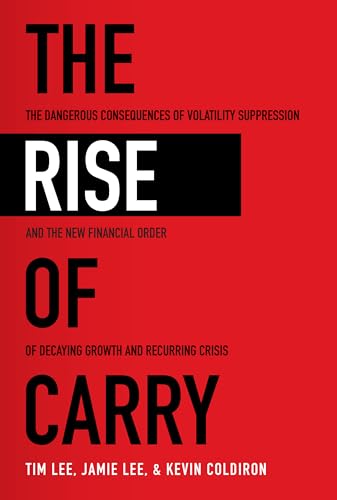
Would you like to learn more? Check out this highly recommended book on Amazon – The Rise of Carry: The Dangerous Consequences of Volatility Suppression and the New Financial Order of Decaying Growth and Recurring Crisis by Christopher Cole (founder of Artemis Capital Management). This book is a first-of-its-kind primer on how the carry trade has become a primary determinant of the global business cycle and its broader consequences. It offers a sophisticated macro perspective on the topic!
What exactly is the Japan carry trade and why does it matter now?
The Japan carry trade is the practice of borrowing low-cost yen, converting it to a currency with higher yield, and investing the proceeds in higher-return assets abroad. It matters now because rising Japanese yields are reversing that flow, forcing repatriation of capital and creating liquidity shocks in the markets that received that capital.
How does the reverse carry trade cause market stress?
When investors unwind positions to return yen, they sell foreign assets quickly. That forced selling reduces liquidity, widens spreads, and increases volatility. Leveraged and illiquid positions are especially vulnerable during this process.
Why would XRP benefit from a Japan carry trade reversal?
XRP is designed as a fast, low-cost bridge currency for crossborder settlement. During liquidity squeezes, institutions prioritize speed and certainty of settlement. If corridor participants in Japan adopt XRP to reduce FX friction and settlement costs, demand would shift from speculative to operational, locking supply and raising price floors.
Could XRP realistically reach triple digits because of this?
Triple digits represent an upper bound scenario contingent on several simultaneous events: severe liquidity stress, broad corridor adoption in major FX hubs, and XRP being used at scale for settlement. It is not a prediction but a mathematically plausible outcome if a fixed-supply asset is required to service massive flows.
Would this kind of move look like a typical crypto pump?
No. Utility-driven adoption by institutions leads to accumulation for use, not speculative flipping. That behavior creates structural floors and more persistent demand, which differs from short-lived retail pumps.
What are the biggest risks to this thesis?
Key risks include regulatory clampdowns on digital asset usage, faster BOJ policy reversals that stabilize FX flows, alternatives to XRP gaining preference, or failure of institutions to integrate digital settlement tools at scale. Liquidity events can also be unpredictable and may move markets in unexpected directions.
How should someone watch for developments tied to the Japan carry trade?
Monitor Bank of Japan communications, yield curve moves, yen strength, crossborder settlement costs, announcements from major Japanese financial institutions like SBI, and reports of pilot programs or corridor tests using digital rails.
Is this a short-term trade or a long-term story?
This is primarily a long-term structural story. The initial liquidity reversal can cause short-term volatility, but institutional adoption and the shift to utility-driven demand play out over months and years rather than days.
Final perspective
Macro shifts often arrive quietly and then quickly reshape price behavior across markets. The Japan carry trade reversal is one of those tectonic shifts. It removes liquidity from places that relied on it and raises the value of tools that reduce settlement friction. XRP is uniquely positioned as a settlement asset that solves liquidity and FX problems at scale. That does not guarantee any price outcome, but it does create a clear, testable framework for how utility adoption could materially revalue a finite asset.
Pay attention to yield moves, yen flows, institutional pilots in Japan, and corridor announcements. Those signals will tell you whether the structural case is becoming reality. Keep risk management front and center, and prioritize education over speculation. Understanding the mechanics behind the Japan carry trade and its reversal gives you an edge when markets change direction.

This blog post is inspired by the video Japan Just Ended 30 Years of ZERO Interest Rates—Why XRP Could Explode. All credit for the video content goes to the original creator. Be sure to check out their channel for more amazing content!